NEMO Eclipse All-Season Sleeping Pad Review
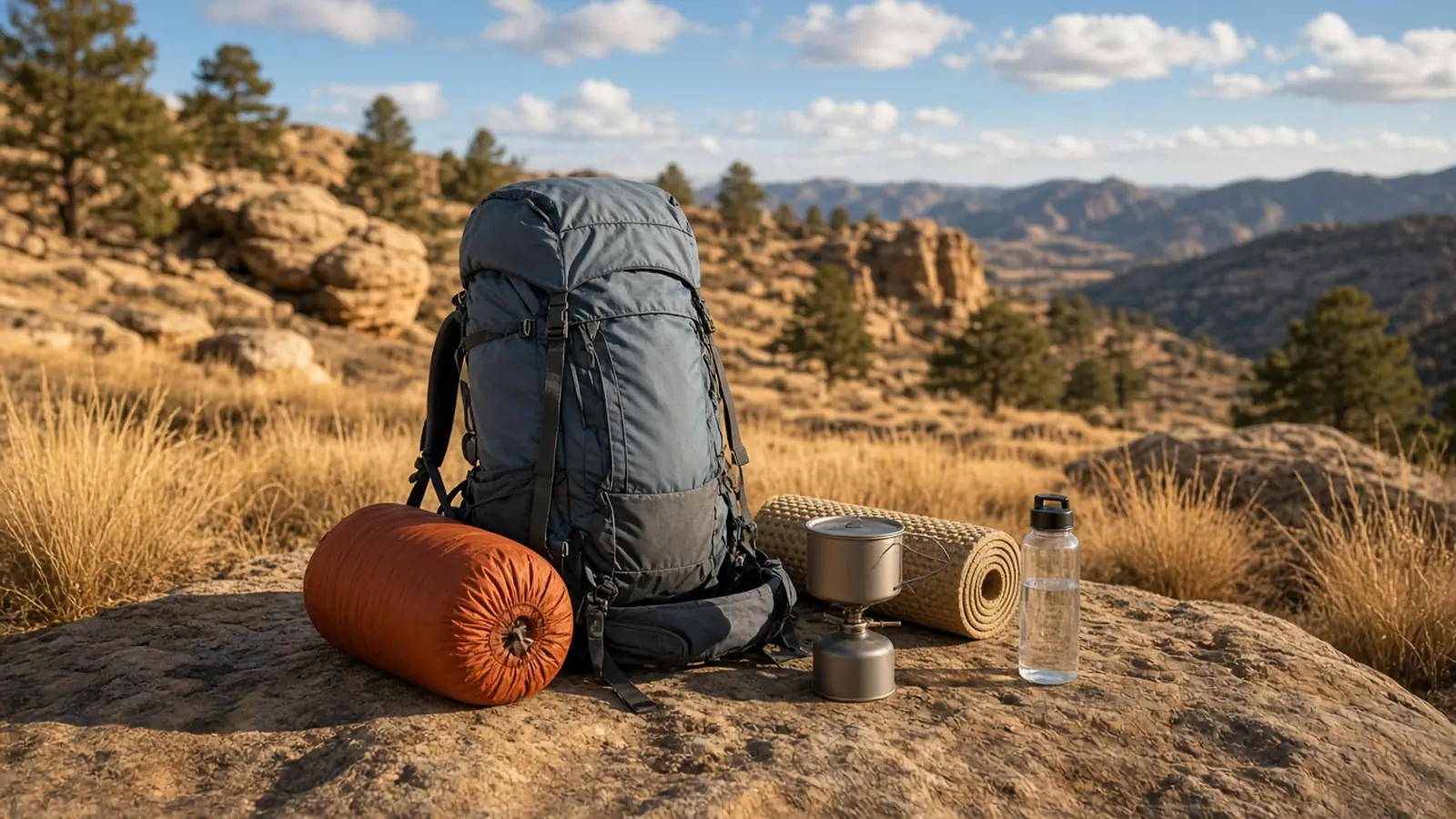
Illustration of the NEMO Eclipse All-Season sleeping pad (not a product photo)
The NEMO Eclipse All-Season is a comfort-first backpacking sleeping pad: about 4 inches of loft, a higher R-value of 6.2 than NEMO’s own Tensor All-Season (~5.4) and many ultralight pads, and a rectangular, lightly contoured surface aimed at hikers who want better nights more than the absolute lightest sleep system. This NEMO Eclipse All-Season review is for backpackers weighing a plush all-season pad against lighter ultralight options—especially side sleepers and larger or taller hikers who need width, length, and enough loft that hips and shoulders do not punch through to the ground.
Methodology: This review is research-based. The specs, features, and comparisons in this review come from NEMO’s published product data and independent reviews (Treeline Review, Better Trail, and similar), not our own measurements.
Official product page: NEMO Eclipse All-Season Sleeping Pad.
Key takeaways
- Buy it if you are a side sleeper or a larger / taller hiker who wants real room (Regular Wide or Long Wide), ~4 inches of loft thick enough to support you, and a higher R-value (6.2) than most Tensor-class / ultralight pads—plus a still-packable rectangular shape—and you will accept roughly a pound-class pad weight.
- Skip it if you are chasing a sub-pound mummy pad, deep-winter max R-value at any comfort cost, or car-camping luxury thicker than backpacking volumes allow.
- Vs Tensor All-Season: Eclipse is thicker and has a higher R-value (6.2 vs ~5.4); Tensor is usually a bit lighter and packs slightly smaller (and typically costs more).
- Honest limit: not the lightest pad in its warmth neighborhood; independent durability scores are fine for careful use, not bombproof.
Specs at a glance
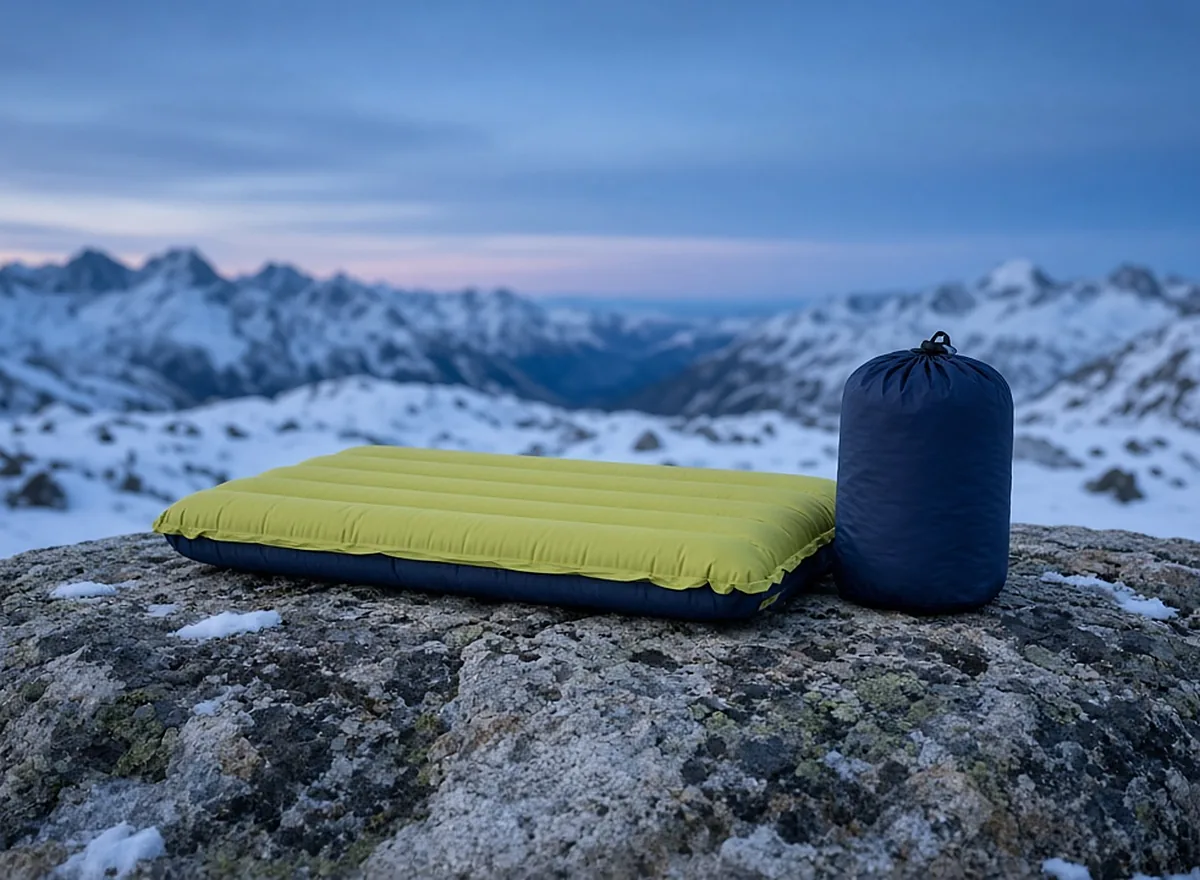
Confirm every size line on NEMO before you buy—weights and packed sizes change with Regular vs Wide vs Long.
| Spec | Published / commonly cited | Notes |
|---|---|---|
| Type | Insulated air pad | Vortex pump sack included |
| Thickness | ~4 in | NEMO: thickest NEMO air pad |
| R-value | 6.2 | All-season class on paper |
| Sizes | Regular, Regular Wide, Long Wide | Rectangular only (no Eclipse mummy) |
| Approx. dimensions | Regular ~72×20×4 in; Regular Wide ~72×25×4; Long Wide ~76×25×4 | Independent size notes — verify on NEMO |
| Weight (NEMO trail / packaged) | Regular 1 lb 0 oz (460 g) / 1 lb 3 oz; Regular Wide 1 lb 4 oz (560 g) / 1 lb 7 oz; Long Wide 1 lb 5 oz (590 g) / 1 lb 8 oz | Trail mins ~16 / 20 / 21 oz — confirm on NEMO |
| Packed size (NEMO) | Regular 10.0 × 4.5 in dia; Regular Wide 10.5 × 4.5; Long Wide 10.5 × 5.5 | Nalgene-class; Tensor All-Season often a bit smaller |
| Fabrics | Top 40D recycled textured nylon ripstop; bottom 40D bluesign nylon | Tensor All-Season: 20D top / 40D bottom |
| Price (NEMO list, 2026-09-24) | Regular $159.95; Regular Wide $189.95; Long Wide $199.95 | Confirm live pricing on NEMO.com |
Comfort, side sleepers, and larger hikers
Comfort is the Eclipse’s job. Four inches of air-supported cushion is a big step up from many 2.5–3.5 inch ultralight pads, and it is the main reason side sleepers and larger-bodied hikers shortlist this model.
NEMO builds the pad with longitudinal Spaceframe baffles—low-stretch, die-cut trusses meant to cut springiness and spread load—plus subtle contouring so the surface cradles instead of feeling like a flat balloon. Independent side-sleeper tests (Treeline Review, Better Trail) generally agree the contour helps keep you centered when you toss and turn.
Why side sleepers like it
- ~4 inches of loft helps keep hips and shoulders from bottoming out the way they can on thin ultralight pads.
- Contoured longitudinal baffles encourage a centered, cradled feel when you roll from side to side.
- Micro-adjust firmness with the Laylow valve—many side sleepers run the pad a touch softer than back sleepers.
Why larger and taller hikers like it
- The Eclipse is rectangular only (no mummy taper), so elbows and knees keep more usable width than on narrow ultralight mummy pads.
- Regular Wide (~25 in wide) gives broader sleepers and restless movers real shoulder room without jumping to a second pad.
- Long Wide (~76 in long × ~25 in wide) is the clear pick for taller frames who hang off Regular length pads.
- Spaceframe load spread is meant to feel stable under body weight rather than springy—useful when you bring more mass to the sleep surface than a wiry ultralight kit assumes.
Thickness as support: At ~4 inches, the Eclipse is thick enough to support side sleepers and larger hikers without the hip-and-shoulder collapse common on thinner ultralight pads. Pair that loft with Regular Wide or Long Wide when you need the footprint to match your frame—not just the air volume.
Independent reviews also note a softer / less slick top fabric than many crinkly ultralight films (useful when you shift a lot). Firmness is still tunable with the Laylow valve’s micro-adjust control—many side sleepers run it a touch softer once they are on the pad.
Warmth and all-season performance (R-6.2)
An R-value of 6.2 is a real step up in ground insulation—higher than the Tensor All-Season (~5.4) and higher than many ultralight pads in the same weight neighborhood. That puts the Eclipse in serious all-season territory for backpacking: cold three-season nights and many winter-adjacent camps when the rest of the sleep system matches. Inside the baffles, NEMO suspends two layers of Thermal Mirror reflective insulation.
Read R-value as ground insulation, not a bag temperature rating. Your quilt or bag, clothing, shelter, and site selection still decide whether you sleep warm. Pair pad planning with our how to choose a backpacking sleeping bag guide—Comfort vs Limit language and sleep-system stacking matter more than any single product slogan.
Independent testers report solid performance on nights in the low 30s when paired with an appropriately warm bag. That is useful context; it is not a Clever guarantee for your metabolism or a deep-winter alpine bivy. For colder specialist trips, warmer pads (for example Tensor Extreme–class R-values) still exist—with their own noise, cost, and comfort tradeoffs.
Weight, packability, and the ultralight tradeoff
This is the decision most gram-conscious backpackers care about.
Per NEMO’s size chart, trail (minimum) weights are Regular 1 lb 0 oz (460 g), Regular Wide 1 lb 4 oz (560 g), and Long Wide 1 lb 5 oz (590 g); packaged weights with sack are 1 lb 3 oz, 1 lb 7 oz, and 1 lb 8 oz. That is light for a 4-inch, R-6.2 rectangular pad—and still heavier than many NeoAir XLite–class or Tensor mummy cuts. Packed sizes stay Nalgene-class: Regular 10.0 × 4.5 in dia, Regular Wide 10.5 × 4.5, Long Wide 10.5 × 5.5.
Vs NEMO Tensor All-Season (same brand, closest sibling): on published Regular rectangular grams, Eclipse is about ½–1 oz heavier (~460 g vs ~440 g), with higher R-value (6.2 vs ~5.4), +0.5 in thickness, slightly larger packed volume, usually lower price, and a more comfort-forward contour. Tensor tends to feel firmer/flatter to some reviewers and offers more shape options on the Tensor line (including mummy cuts).
When the extra ounces are worth it
- You wake up more recovered on plush pads and will hike better the next day.
- You side-sleep and keep bruising hips on 2.5–3 inch mats.
- You want higher R-value warmth (6.2) in one pad for shoulder seasons without carrying a second winter mat.
When ultralight still wins
- You are forcing a true ultralight base and the sleep system is already “good enough.”
- Packed volume in a small frameless pack is the bottleneck.
- You prefer a mummy footprint and will not use the rectangular corners.
Log the real size weight in Pack Builder as base weight (pads are not consumables). Definitions and cut order live in the ultralight base weight guide.
Who should buy / who should skip
Buy the Eclipse All-Season if you:
- Are a side sleeper who wants overnight recovery more than the lightest possible mat.
- Are a larger or taller hiker—the ~4-inch loft is thick enough to support you, and Regular Wide or Long Wide give the room a tapered mummy pad will not.
- Want higher R-value, all-season-capable pad warmth (6.2) without a dedicated winter-only mat for most trips.
- Prefer a rectangular pad and will accept roughly 1–1.3 lb trail weight depending on size (Regular through Long Wide).
- Like the idea of quieter reflective-film insulation than some louder winter pads (subjective; verify yourself).
Skip it if you:
- Need the lightest possible insulated pad and will accept less loft.
- Want maximum toughness for abrasive camps with thin tent floors—treat 40D-class comfort pads with care, groundsheet, and a patch kit.
- Are shopping for car-camping luxury thicker/heavier than backpacking volumes (look at NeoLoft-class mats instead).
- Need a mummy-shaped Eclipse—NEMO does not offer one on this model.
Eclipse vs Tensor All-Season (and a quick luxury note)
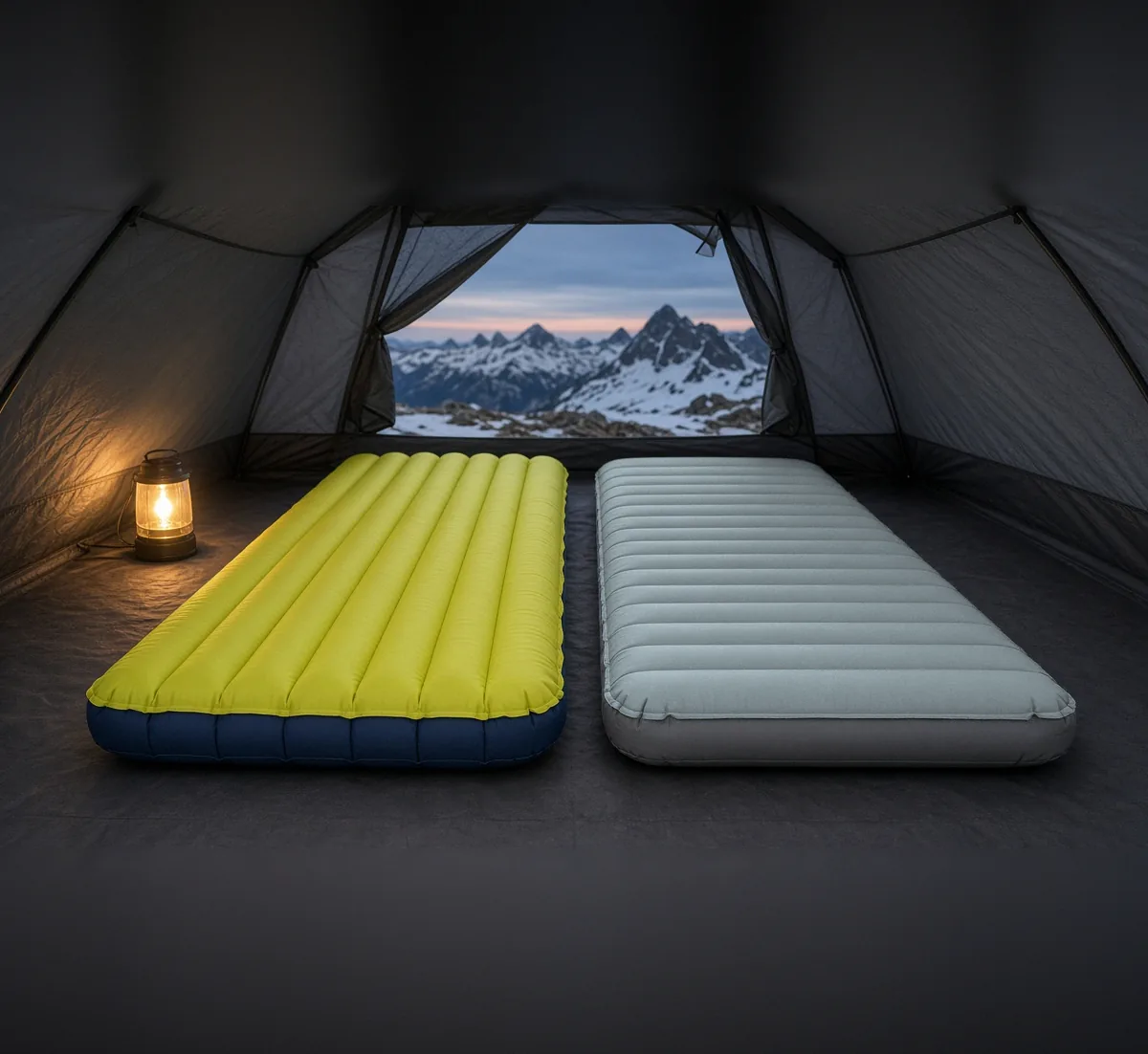
Keep this comparison short—this page is an Eclipse review, not a ranked “best pads” list.
| Eclipse All-Season | Tensor All-Season (typical published) | |
|---|---|---|
| Thickness | ~4.0 in | ~3.5 in |
| R-value | 6.2 | ~5.4 |
| Feel (reviewers) | Plush / contoured cradle | Firmer / flatter for some |
| Weight | Slightly heavier (~½–1 oz Regular rectangular) | Slightly lighter |
| Packed size | Small | Often a bit smaller |
| Fabrics (often cited) | 40D / 40D | 20D top / 40D bottom |
| Price | Usually lower | Usually higher |
| Shapes | Rectangular only | More options on Tensor line |
NeoLoft-class luxury pads trade more weight and bulk for brushed-top car-camping comfort and often lower R-value than Eclipse. Choose those when comfort is everything and backpack ounces are secondary.
How it fits Pack Builder and base weight
Add your Eclipse size’s trail weight to Pack Builder under sleep system / pad as base gear. Then check whether the upgrade pushed you from a comfortable lightweight band into a range you do not want—or whether you can cut shelter or pack ounces instead. Use the tools hub if you also need Clever Gear Finder preference steps before you buy.
Shelter still matters for warm nights: a drafty ultralight tent changes how hard the pad and bag have to work. See how to choose an ultralight tent when you are balancing the Big Three together, and the essential backpacking gear checklist if you are still building the full kit list.
Features worth knowing (without the brochure voice)
- Spaceframe baffles — stability and load spread; less “waterbed” bounce than simple tubes on many pads.
- Thermal Mirror (two layers) — the insulation stack behind R-6.2.
- Laylow valve — flush, multi-function, micro-adjust firmness; some hikers prefer twist-lock valves, but most find Laylow easy once learned.
- Vortex pump sack — faster inflation, less breath moisture; especially useful at elevation. You can leave it out of the overnight kit if bulk bothers you.
Honest limits
- Not the lightest comfort-warm pad class—ultralight specialists will find lighter options with enough R-value for mild trips.
- Durability is adequate, not legendary. Independent scores put durability mid-pack; clear debris, use a groundsheet, carry patches.
- Wide and long sizes weigh more—log Regular Wide / Long Wide honestly in Pack Builder if that is your size.
- “All-season” is a planning label, not a promise for every winter objective.
- Research-based, not lab-tested: warmth and weight figures are NEMO’s published specs (see the methodology line above).
Related reading
- How to Choose the Right Sleeping Bag for Backpacking
- Ultralight Base Weight Guide
- How to Choose an Ultralight Tent
- Pack Builder · Free planning tools hub
- Essential backpacking gear checklist
Sources
- NEMO — Eclipse All-Season: https://www.nemoequipment.com/products/eclipse-all-season-sleeping-pad
- Treeline Review — Eclipse All-Season review: https://www.treelinereview.com/gearreviews/nemo-eclipse-all-season-sleeping-pad
- Better Trail — Eclipse All-Season review: https://bettertrail.com/outdoor-gear/nemo-eclipse-all-season-sleeping-pad-review
- OutdoorGearLab — Tensor All-Season (comparison context): https://www.outdoorgearlab.com/reviews/camping-and-hiking/sleeping-pad/nemo-tensor-all-season-ultralight-insulated