A backpack’s frame, or the choice to go without one, changes how the pack moves weight to your hips, how carefully you have to pack, and how heavy a load you can carry comfortably at the start of a trip.
This article compares three common classes side by side: traditional internal-frame packs, ultralight framed packs, and frameless packs. It is a research comparison, not a product review. The load ranges below come from independent reviewers and from maker ratings we checked on November 9, 2026. Comfortable limits still vary with torso fit, hipbelt fit, packing quality, pack design, and the hiker.
Frame type is only one part of the decision. Once you know which class fits your load, our guide to choosing a backpack by fit, capacity and load covers torso length, hipbelt fit, and how much volume your trips need.
Key takeaways
- Match the pack class to your heaviest realistic start-of-trip load — base gear plus food, water, and fuel — not to the pack’s empty weight.
- Reviewers typically put frameless packs at roughly 20–25 lb total. Ultralight framed packs are often summarized at 25–35 lb — SectionHiker also says they are intended for 25–40 lb, and Switchback puts most at about 30–35 lb — and some maker ratings are 40 lb. Traditional internal-frame packs sit higher, with some maker ratings up to about 60 lb. These are ratings and rules of thumb, not guarantees.
- Frameless packs ask for a light, compact kit and careful packing. A traditional pack is the more comfortable choice when loads regularly climb past what a lightweight framed pack is built to carry.
- After you pick a class, choose the actual pack by fit, capacity, and trip type.
What framed and frameless actually mean
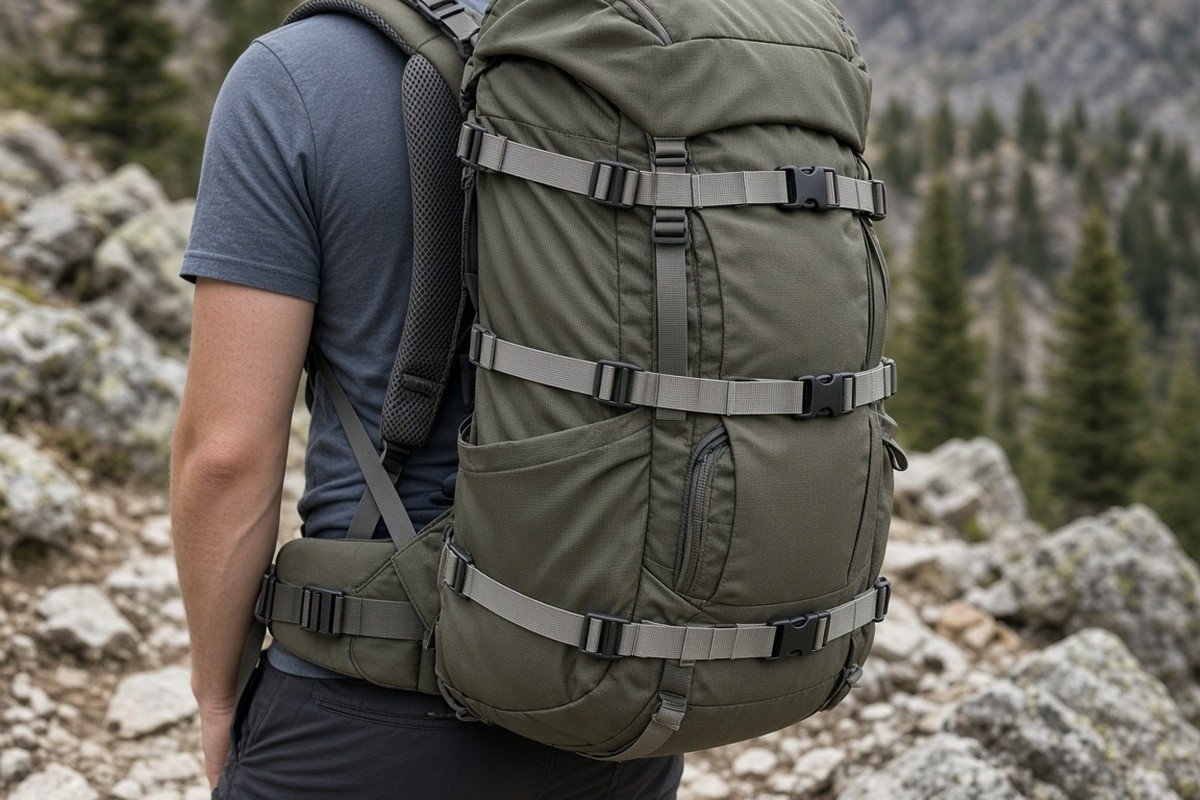
Traditional internal-frame packs hide the structure inside the back panel. REI describes them as the majority of packs sold at REI today, built so the frame and hipbelt can transfer the load to the wearer’s hips. In this comparison they are usually the heaviest, most padded option, and they are made for heavier or bulkier kits.
Ultralight framed packs use a lighter structure: one or two stays, a framesheet, a light hoop or U-shaped frame, or a tensioned mesh panel that holds the pack off the back. OutdoorGearLab (July 18, 2023) groups these as simple frames, which keep the pack from collapsing and help move weight to the hipbelt, and tensioned air frames, which add a ventilation gap. Reviewers generally describe these packs as weighing under 3 lb, often around 2–3 lb in the 40–60 liter range (Switchback Travel, May 12, 2026; SectionHiker, July 2026).
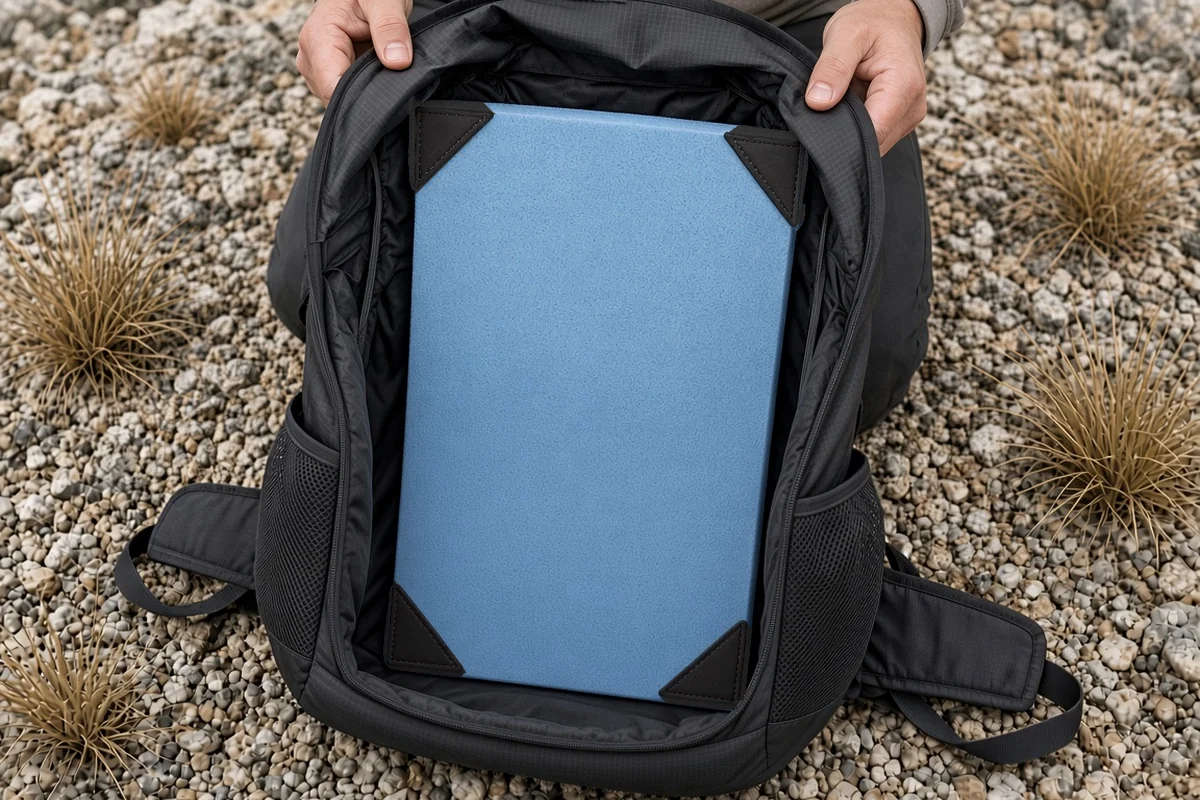
Frameless packs have no rigid frame. The packed contents have to hold the bag’s shape. A common method, sometimes called a virtual frame, is to fold a sleeping pad flat against the inside back panel. SectionHiker describes it that way, and says a well-packed frameless pack should feel like one solid unit. Under a modest, compact load, that can be enough. Under a heavy or loosely packed load, more of the weight sits on the shoulders.
External-frame packs — the older design with a visible frame and a bag mounted to it — still show up for heavy or irregular loads, such as trail-crew or hunting kits. They ventilate well and are at their best on well-graded trails, but they are heavier and less common for typical backpacking (REI). Some modern ultralight packs use an external hoop or arc that pulls the bag off the back; treat those as a ventilation design, not as a return to classic external-frame packing.
Side-by-side: the tradeoffs
| Traditional internal-frame | Ultralight framed | Frameless | |
|---|---|---|---|
| Empty pack weight | About 3.5–6 lb (Switchback Travel, 2026) | Often under 3 lb; many 40–60 L models land around 2–3 lb (Switchback; SectionHiker, 2026) | Many land around 15–23 oz (about 1–1.5 lb), with lighter and heavier outliers (SectionHiker, 2026) |
| Comfortable load (total, start of trip) | Higher: reviewers describe up to 50 lb or more; some maker ratings run 30–60 lb | Often summarized at 25–35 lb; some reviewer and maker ratings at 40 lb | Roughly 20–25 lb; Skurka’s 2019 advice is to stay regularly under 20 lb |
| How the load is carried | Frame and hipbelt transfer weight to the hips (REI) | The same idea, with lighter frame parts (OutdoorGearLab) | Mostly on the shoulders; the hipbelt often stabilizes, though designs vary (see below) |
| Packing | More forgiving | Moderate | Needs careful packing; often a pad folded flat against the back (a virtual frame) |
| Ventilation | Some packs use a suspended mesh back panel, with the packbag held a few inches off the back (REI) | Varies: some use a mesh trampoline, some sit closer | Usually flush to the back, which can carry well but often means a sweatier back |
| Typical volume | About 50–80 L (Switchback) | About 35–70 L, often 40–60 L (Switchback; SectionHiker) | Often about 30–50 L (SectionHiker’s 2026 frameless list) |
Volume and load limit are not the same thing. Switchback notes that two packs of very different volumes can share a similar load rating, so a roomy bag is not automatically built for a heavier carry.
Load ranges: total weight, not base weight
Every load range in this article is total start-of-trip weight: your packed gear plus food, water, and fuel. That is a different number from what counts as base weight, which leaves the consumables out.
Most reviewers and makers put frameless packs’ comfortable range at roughly 20–25 lb total. SectionHiker (August 2026), Backpacker (May 1, 2023), and Treeline Review (August 28, 2023) agree on that band. In a 2016 post, Andrew Skurka wrote that frameless packs cannot comfortably carry “25-ish” lb or more. In a 2019 comment, he advised being regularly below 20 lb before switching, with only occasional days above that — for example, a long water carry.
Ultralight framed packs are often summarized at about 25–35 lb. SectionHiker (July 2026) says the framed packs on that list can usually carry 25–35 lb, and on the same page says they are intended for 25–40 lb. A cross-link on its frameless-pack list puts framed packs at 25–40+ lb. Switchback Travel (May 2026) puts most ultralight packs at about 30 to 35 lb. Some maker and reviewer ratings land at 40 lb, including the Southwest 40 L and 55 L below. That 40 lb figure is not a ceiling for the whole class, and it does not include larger sizes that rate higher and start to overlap traditional packs.
Traditional internal-frame packs sit above that. Switchback describes them as carrying up to 50 lb or more. Treeline describes heavy-duty packs in a 60 lb rating class.
Maker ratings we checked on November 9, 2026, as examples rather than recommendations:
- Gossamer Gear Kumo 36 (frameless): 20 lb for comfort, 25 lb maximum.
- Gossamer Gear Mariposa 60 (ultralight framed): 30 lb for comfort, 35 lb maximum.
- Hyperlite Mountain Gear Southwest (ultralight framed, with removable stays): the 40 L and 55 L are rated up to 40 lb; the 70 L is rated up to 60 lb, a figure that overlaps traditional internal-frame packs such as the Osprey Aether 65 (30–60 lb). The 70 L rating is not a ceiling for the ultralight framed class as a whole.
- Osprey Aether 65 (traditional internal-frame): 30–60 lb.
These are maker ratings, not a promise of comfort for every hiker. Treeline Review notes that consistently going over a pack’s rating can mean discomfort, a higher risk of injury, and extra wear on the pack.
A light base weight can still outgrow a pack once you add food and water. Our base weight ranges, traditional to ultralight, are conventions, not standards: traditional around 20+ lb, lightweight about 10–20 lb, ultralight under about 10 lb, and super ultralight under about 5 lb. Switchback’s practical line is that if your base weight is 10–12 lb or more and you will be out for more than a few days, a pack with a frame is usually more comfortable. OutdoorGearLab similarly notes that a 13–15 lb base often becomes about 25 lb once food and water are in the pack, which is where a simple or tensioned ultralight frame starts to earn its keep. Under about 15 lb total, OutdoorGearLab found that a frame matters less for comfort.
Water alone can move you between classes. A liter weighs about 2.2 lb; a US gallon of water is about 8.3 lb (Backpacker rounded this to “roughly 8.4”). Two liters add about 4.4 lb before you drink any of it. Add up your start-of-trip weight in the Clever Pack Builder rather than guessing from empty pack weight or base weight alone.
How stays, framesheets, and hipbelts differ
A stay is a rod, usually aluminum, that keeps the pack from collapsing and helps move weight to the hipbelt. A framesheet is a panel, often foam plus a stiffer sheet, that spreads the load and holds the bag’s shape. Some ultralight packs use a light hoop or U-shaped “perimeter” frame instead of two straight stays (OutdoorGearLab). A tensioned or suspended mesh back panel holds the packbag a little away from your back, which improves airflow. The tradeoff, as Andrew Skurka described in 2016, is that a load often carries best when it sits flush against the back, while an airflow gap can push the weight slightly backward. Flush carry, which is typical of frameless packs, can also mean a sweatier back.
Some ultralight framed packs have removable stays, so you can pull the frame on a short, light trip and put it back when the load climbs. Hyperlite Mountain Gear describes the stays in the Southwest that way on its product page.
The hipbelt’s job changes with the class. On a traditional or ultralight framed pack, the frame is what lets the belt take a meaningful share of the weight. On most frameless packs the belt mainly stabilizes the bag; how much weight it actually carries varies by design. SectionHiker describes frameless hipbelts as not load-bearing, because there is no frame to transfer the load to the hips. Backpacker testers, writing about one wide-belted frameless model, said the belt wings did transfer weight comfortably to the hips. Treat that as a design difference, not a rule for the whole class.
A middle path: removable frames
Some packs are built to work with or without their frame, so one bag can cover a light overnight and a heavier resupply. The Granite Gear Crown3 60 is one example: the maker rates it at 25 lb without the framesheet, 35 lb with it, and 43 lb with an add-on stay, matching Treeline Review. The stay increases load capacity by 8 lb. A 2023 Backpacker sale blurb said 45 lb with the stay. SectionHiker is more conservative, with a recommended load of 30–35 lb. The useful point is the design, not this one model: a removable framesheet or stay can bridge classes if your trips swing widely in weight.
When to choose each type
A frameless pack fits when your total start-of-trip load stays in that roughly 20–25 lb band, and stays regularly under about 20 lb if you follow Skurka’s 2019 advice. The kit already has to be light and compact — Switchback Travel reserves frameless packs for hikers who already travel very light, and does not recommend them for most people. You also need to be willing to pack a solid virtual frame. If you are still building a full kit with maker-listed weights, finish the kit first and then choose the pack.
Frameless is a poor fit when the rest of your gear is still heavy or bulky. Backpacker (May 1, 2023) argues for buying the pack last, and lists long water carries, hiking with kids and shared gear, a preference for ventilation or shoulder comfort, and “ache-prone shoulders” as reasons to skip frameless. Skurka has also noted that a frameless pack is much less comfortable with a bear canister. Heavier or more irregular loads follow the same logic.
An ultralight framed pack fits when your usual start-of-trip load sits in the 20s and up into the low or mid-30s, or when your base weight is in the lightweight band and you will be out for several days. OutdoorGearLab’s testers often preferred a pack about half a pound heavier than the lightest option, because it stayed more comfortable once the load climbed into the 20s. This is also the usual class for a longer trip that has a few heavier days — a full food carry or a dry stretch — without the bulk of a traditional pack.
A traditional internal-frame pack fits when your loads regularly go past what ultralight framed packs are built to carry, roughly the mid-30s and up. SectionHiker’s 2026 framed-pack overview is blunt: if you need to carry more than that 25–35 lb range, you will want a much heavier backpack. This is also the practical choice if you are still using a traditional kit, carrying shared or family gear, or you want a more adjustable torso, heavier padding, and a suspended-mesh back panel. Fit details belong in the guide to choosing a backpack by fit, capacity and load; this comparison only answers which class to start from.
What to do next
Add your base gear, food, and water in the Clever Pack Builder and use the heaviest realistic start-of-trip total, not the lightest day on trail, to pick a class. Then use the fit-and-needs guide to size the pack to your torso, hipbelt, and trip volume.
Sources
Figures in this article are from the sources below. Maker ratings were checked on November 9, 2026. Reviewer ranges are generalizations, not lab measurements.
- REI Expert Advice, How to Choose a Backpack
- REI, What’s the Difference Between an External Frame Pack and an Internal Frame Pack?
- Switchback Travel, Best Ultralight Backpacks (updated May 12, 2026)
- OutdoorGearLab, How to Choose an Ultralight Backpack (July 18, 2023)
- SectionHiker, 10 Best Frameless Ultralight Backpacks of 2026 (published August 2, 2026; updated August 23, 2026)
- SectionHiker, 10 Best Ultralight Backpacks with Frames of 2026 (July 2026)
- SectionHiker, How to Pack a Frameless Backpack
- Treeline Review, How to Choose a Backpacking Backpack (August 28, 2023)
- Treeline Review, Granite Gear Crown3 60 (July 19, 2024)
- Granite Gear, Crown3 60 (maker ratings checked November 9, 2026)
- Granite Gear, Crown3 aluminum stay add-on
- Backpacker, 4 Reasons Why You Shouldn’t Use a Frameless Pack (May 1, 2023)
- Andrew Skurka, Flex Capacitor self-critique (2016; updated 2018)
- Andrew Skurka, reader Q&A comment (reply dated March 21, 2019)
- Maker spec pages, checked November 9, 2026: Gossamer Gear Kumo 36, Gossamer Gear Mariposa 60, Hyperlite Mountain Gear Southwest, Osprey Aether 65